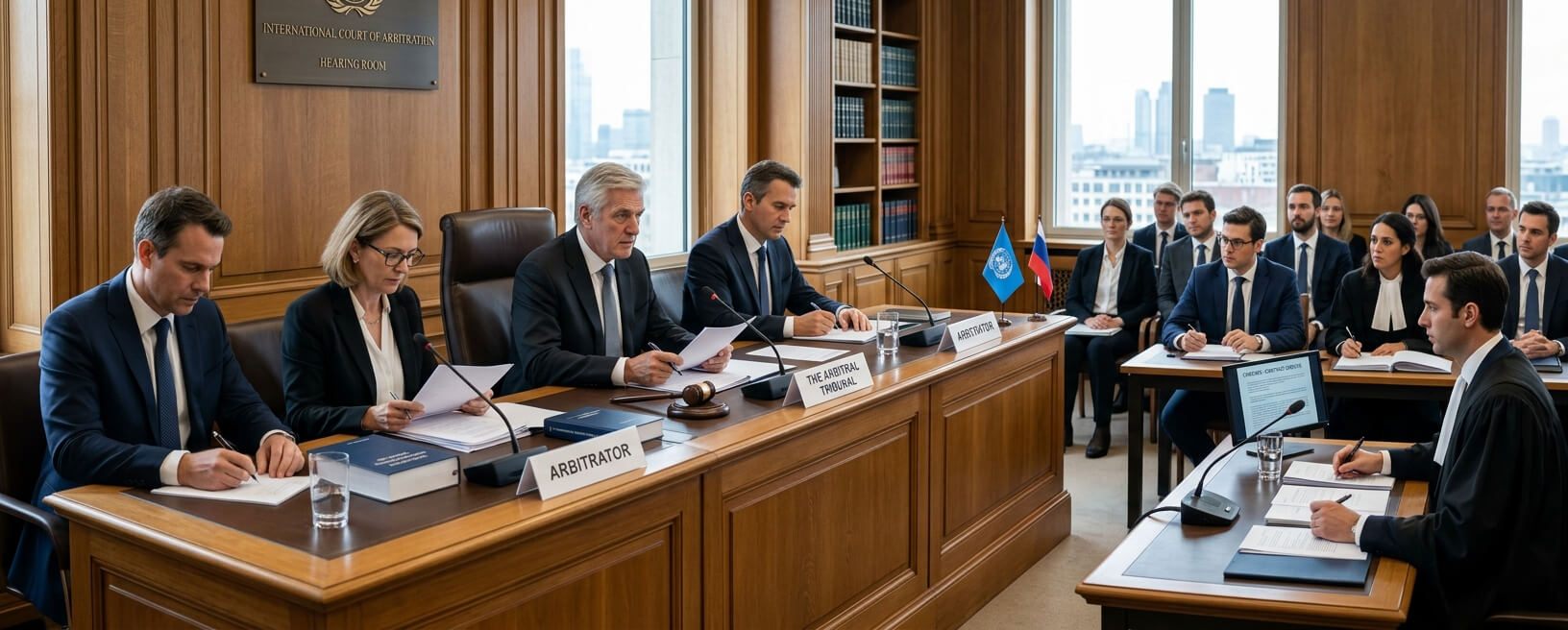


The international arbitrator constitutes the cornerstone of the arbitration process. He or she is entrusted with resolving disputes whose implications may extend beyond national borders and across different legal systems. Although arbitration is fundamentally based on the parties’ agreement and free will, its success and effectiveness largely depend on the arbitrator’s character, independence, competence, and professional integrity.
An arbitral award derives its authority not only from legal rules and principles but also from the confidence that the parties place in the individual responsible for rendering the decision. Consequently, the selection of an arbitrator is among the most critical decisions in any arbitration proceeding.
First: Arbitrator Independence and Impartiality
Independence and impartiality are fundamental principles upon which arbitral justice is built. An arbitrator must remain free from any influence, interest, or relationship that could affect their objectivity while considering a dispute.
The requirement extends beyond actual impartiality to include the avoidance of any circumstances that may reasonably give rise to doubts regarding the arbitrator’s independence. For this reason, most arbitration rules and institutions require arbitrators to disclose any relationships, interests, or circumstances that may affect the integrity of the proceedings or be perceived as creating a conflict of interest.
Early and transparent disclosure is considered one of the most effective tools for preserving the credibility of the arbitration process and preventing disputes concerning arbitrator challenges or objections to arbitral awards.
Second: Professional Competence and Expertise
It is not sufficient for an arbitrator to be independent and impartial. The arbitrator must also possess the knowledge and expertise necessary to understand the nature of the dispute and resolve it effectively.
Modern international disputes require advanced understanding of international law, international trade, investment law, and cross-border contracts, in addition to the ability to manage arbitration proceedings efficiently while ensuring equality between the parties.
Technical expertise has also become increasingly important in specialized sectors such as energy, technology, infrastructure, and intellectual property, where legal issues often intersect with complex technical considerations that demand a deep understanding of the subject matter in dispute.
Third: The Legal Responsibility of the Arbitrator
Although arbitrators enjoy a certain degree of legal immunity in many jurisdictions while performing their duties, such protection is not absolute.
Legal liability may arise in exceptional circumstances, including bad faith, gross negligence in the performance of professional duties, or violations of fundamental principles governing arbitration proceedings. Certain forms of unprofessional conduct may also undermine the validity of an arbitral award or create grounds for challenging or refusing its enforcement.
Accordingly, arbitrators must adhere to the highest standards of professionalism and transparency and ensure that disputes are managed in accordance with applicable legal and procedural rules.
Balancing Authority and Responsibility
Arbitrators possess broad powers in managing arbitral proceedings, evaluating evidence, and issuing final awards. However, these powers are accompanied by significant professional and ethical responsibilities.
Every procedural or substantive decision rendered by an arbitrator may directly affect the rights and legal positions of the parties. This requires strict adherence to the principles of justice, equality, confidentiality, and the protection of each party’s right to be heard.
Challenges Facing Arbitrators in the Modern International Environment
Recent years have witnessed significant developments in the nature of international disputes, which have become increasingly complex and interconnected due to globalization, technological advancement, and the rapid growth of international investment.
In light of these changes, arbitrators are no longer expected merely to possess legal knowledge. They must also understand economic and commercial environments, diverse legal cultures, digital evidence, and modern technologies used in dispute resolution.
Between Trust and Justice
The standing of an international arbitrator ultimately depends on the ability to maintain a balance between independence, competence, and responsibility. These three elements are not separate qualities but rather an integrated framework that ensures the integrity of the arbitration process and the effectiveness of its outcomes.
The higher the standards applied to the selection, qualification, and professional development of arbitrators, the greater the confidence that parties place in international arbitration as a fair and effective mechanism for resolving disputes in an increasingly complex legal and economic environment.
The Role of the International Federation of Arbitration (IFA)
The International Federation of Arbitratioشn believes that a qualified and independent arbitrator is the foundation of a successful arbitration process. Accordingly, the Federation is committed to promoting legal knowledge, strengthening professional and ethical standards among arbitrators, encouraging continuous training and the exchange of expertise, and keeping pace with the rapid developments in international arbitration, thereby contributing to greater trust and justice in dispute resolution.
Final Word
The international arbitrator remains the cornerstone of a successful arbitration process, embodying the values of justice, impartiality, and professional competence. As international disputes continue to grow in complexity, the importance of selecting arbitrators who possess independence, expertise, and legal responsibility becomes increasingly evident, ensuring the integrity of proceedings and the confidence of parties in arbitral outcomes.
References
- Abdel Hamid El-Ahdab, Encyclopedia of International Commercial Arbitration, Halabi Legal Publications, Beirut.
- Abdel Hamid El-Ahdab, Arbitration in International Contracts, Halabi Legal Publications, Beirut.
- Ibrahim Ahmed Ibrahim, International Arbitration Law: A Comparative Study, Dar Al-Nahda Al-Arabiya, Cairo.
- Suleiman Abdel Moneim, International Commercial Arbitration, Halabi Legal Publications, Beirut.
-
Mohamed Abdel Hamid Hussein, International Commercial Arbitration: Theory and Practice, University Thought House, Alexandria.